Jian Tang’s (Graduate School of Engineering) paper has been accepted for International Journal of Steel Structures.
Congratulations!
Authors
Jian Tang, Muye Yang
Affiliation
Faculty of Engineering
Manuscript Title
Effects of Solution Temperature on the Galvanic Corrosion Between Carbon Fiber and Carbon Steel SM490A
Abstract
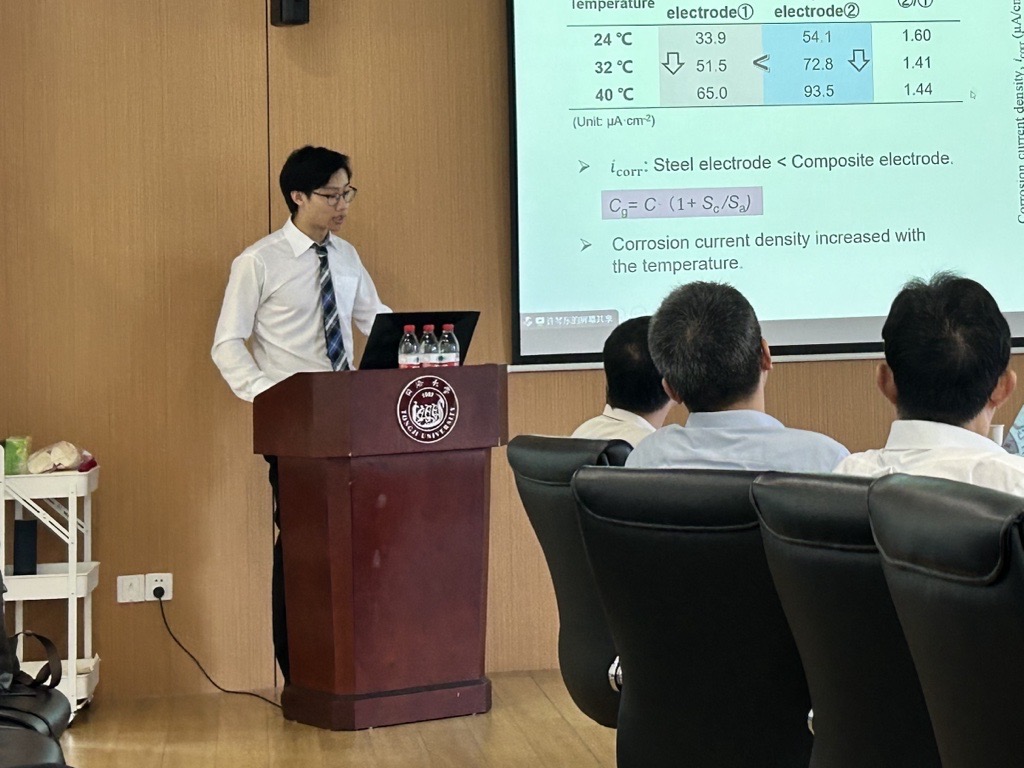
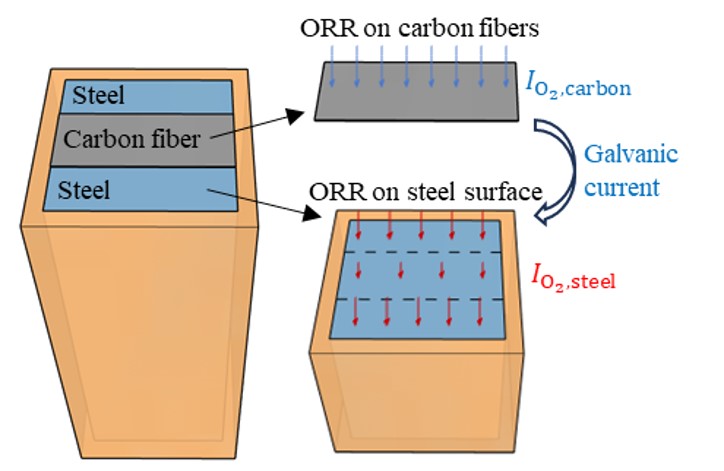
Temperature significantly affects the galvanic corrosion behavior between carbon fiber reinforced plastic (CFRP) and carbon steel. The corrosion rate of steel components in bridges may increase at high temperatures during summer. To examine the impact of solution temperature on the galvanic corrosion between CFRP and carbon steel, electrochemical tests were conducted at different temperatures. The open circuit potential (OCP) results and potentiodynamic polarization (PDP) results indicated that the presence of carbon fiber to carbon steel led to increased potential and accelerated corrosion rates. Subsequently, the temperature-promoting factor was used to predict the corrosion rates of steel with galvanic corrosion based on the Arrhenius equation. Finally, the limitations of the temperature-promotion factor were analyzed theoretically.
Journal name
International Journal of Steel Structures
Relevant SDGs
SDGs 11 (SUSTAINABLE CITIES AND COMMUNITIES)
Comments
We proposed a new method to analyze the corrosion of Fe-carbon fiber reinforced (CFRP) galvanic cells. We believe this will provide an important reference for the durability analysis of CFRP-reinforced steel structures. We plan to further investigate the effects of different environmental conditions and develop more efficient anti-corrosion technologies. If you have any questions or are interested in collaborating, please contact us without hesitation (Research profile is given below).